
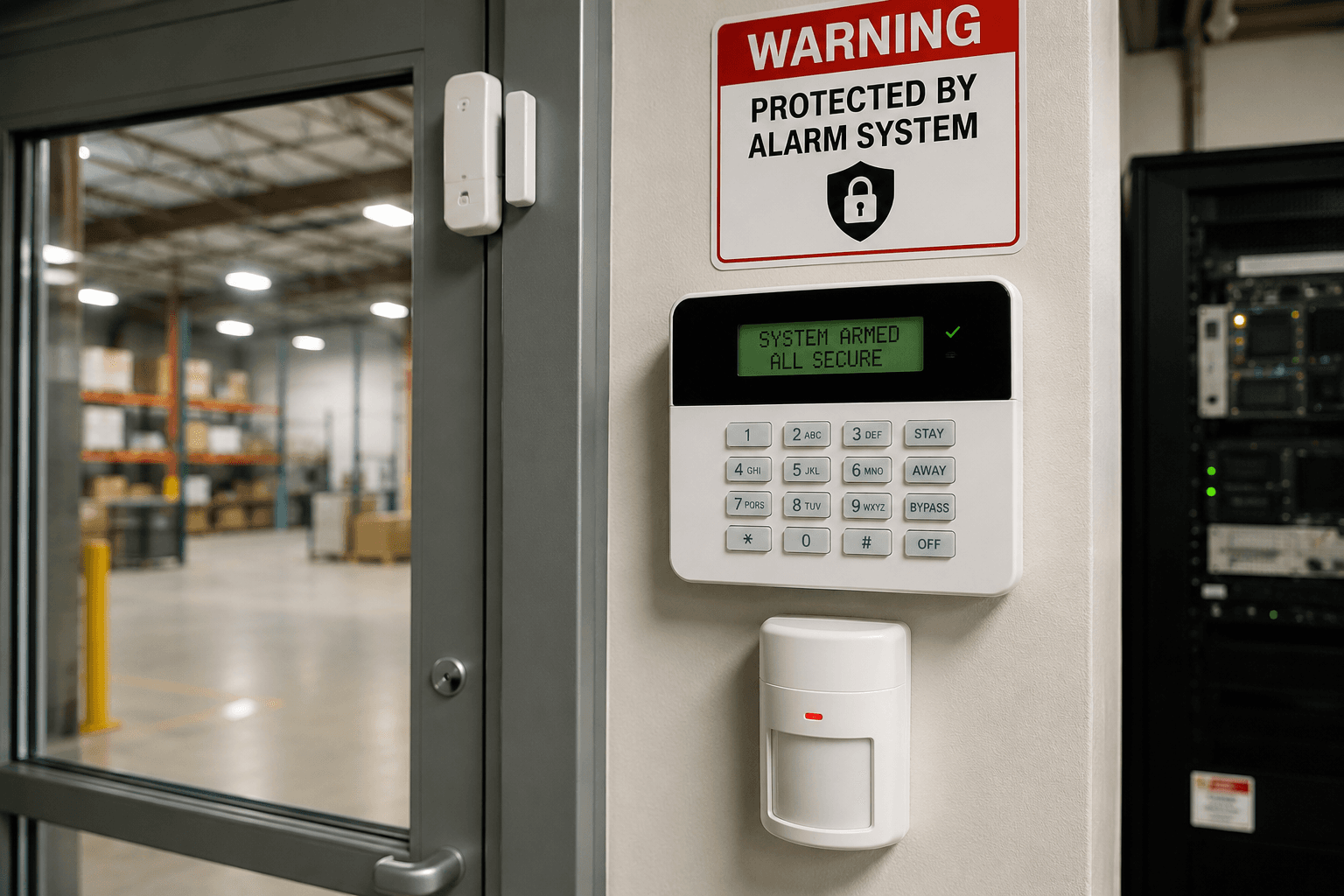
Intrusion alarm system installation for a Fresno commercial property typically combines door and window contacts, interior motion sensors, and a monitored alarm panel that alerts a monitoring center — and by extension, the business owner and local authorities — the moment an unauthorized entry is detected after hours.
Why After-Hours Detection Matters for Fresno Businesses
Break-ins overwhelmingly happen when a property is unoccupied — nights, weekends, and holidays — which is exactly when a business has the least ability to respond in real time. A monitored intrusion detection system closes that gap by triggering an immediate alert rather than relying on a passerby noticing a broken window or an employee discovering the damage the next morning. For warehouses, distribution facilities, and office buildings across Fresno, that immediate notification is often the difference between an attempted break-in and a completed one.
Core Components of a Commercial Intrusion Detection System
- Door and window contacts — detect when an entry point is opened outside scheduled hours.
- Interior motion sensors — cover open floor areas and hallways in case an entry point is bypassed.
- Glass break sensors — detect forced entry through windows or glass doors before a door contact would trigger.
- Monitored alarm panel — the central hub that reports events to a 24/7 monitoring center rather than only sounding a local siren.
Full detail is on our intrusion detection page.
Monitored vs. Unmonitored Alarm Systems
An unmonitored system that only sounds a local siren depends on someone nearby hearing it and knowing to respond — which rarely happens at a commercial property overnight. A monitored system routes the alert to a staffed monitoring center that verifies the event and contacts the business owner and, when appropriate, local law enforcement. For a Fresno commercial property, that verified, immediate response is the primary value of paying for monitoring rather than relying on an alarm panel alone.
Licensing Matters for Alarm System Installers
In California, companies that sell, install, or monitor alarm systems are required to hold an Alarm Company Operator license through the Bureau of Security and Investigative Services (BSIS). Working with a properly licensed installer isn't just a compliance checkbox — it reflects a level of accountability and training that matters when a false alarm, a missed event, or a system malfunction has real consequences for the property.
Integrating Intrusion Detection with Video and Access Control
An intrusion alarm doesn't have to operate as an isolated system. Paired with video surveillance and access control on one managed platform, an alarm event can trigger camera footage review and a full access log review at the same time — giving a business owner a complete picture of what happened rather than a single data point.
FAQ
What's the difference between a monitored and unmonitored alarm system?
A monitored system reports alarm events to a staffed monitoring center that verifies the event and contacts the business and, if needed, law enforcement. An unmonitored system only sounds a local siren with no guaranteed response.
Do alarm companies need to be licensed in California?
Yes — alarm companies operating in California must hold an Alarm Company Operator license through BSIS. You can verify a company's license status directly through the BSIS website.
Can intrusion detection be added to a property that already has cameras?
Yes, intrusion detection is commonly added to an existing video surveillance setup and integrated into one managed platform rather than run as a separate system.
How quickly does a monitoring center respond to a triggered alarm?
Response times vary by provider, but a properly configured monitored system typically verifies and escalates an event within moments of the trigger, rather than waiting for a scheduled check.
Protect your Fresno property after hours. Schedule Your Site Consultation to design a monitored intrusion detection system for your facility.