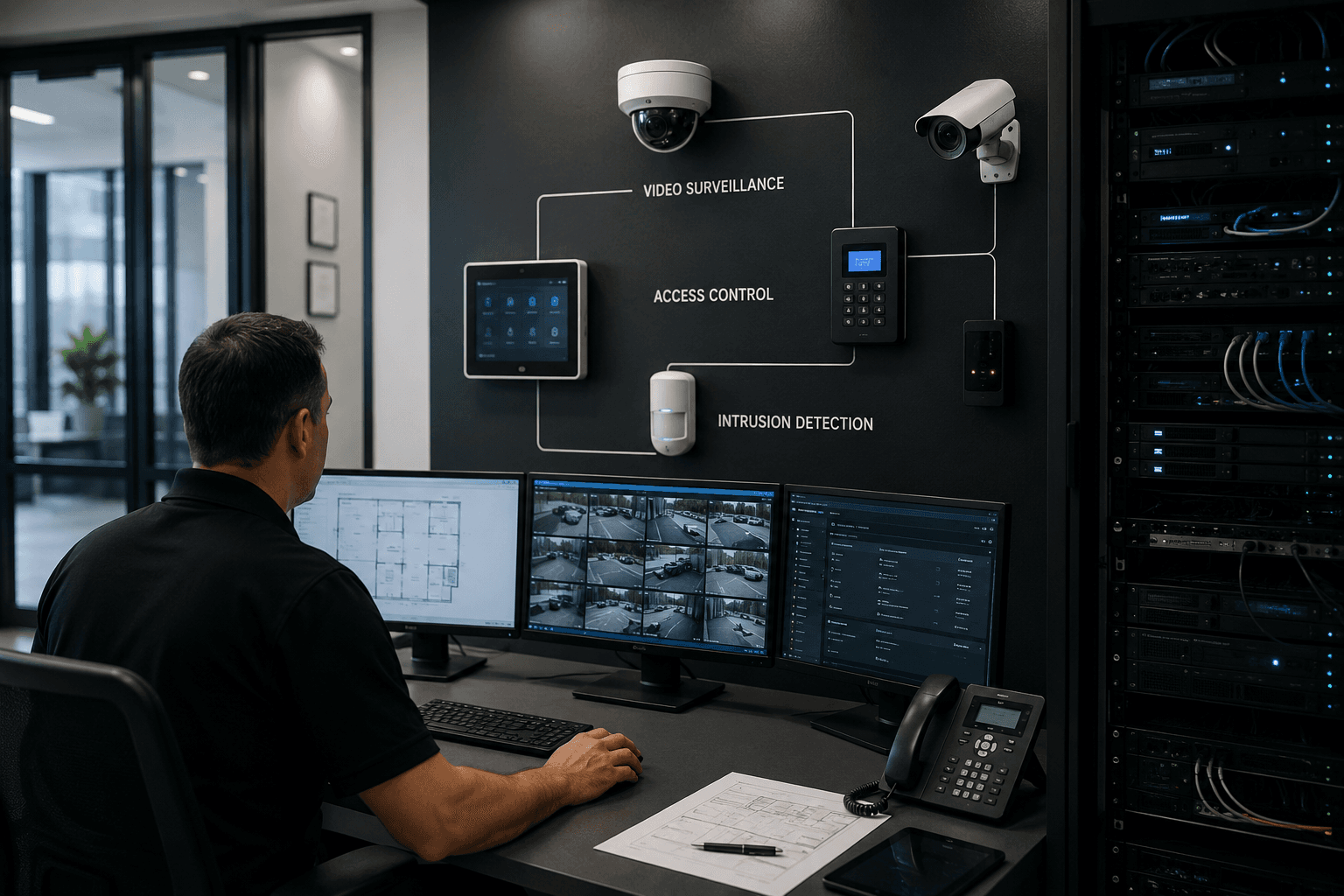
A security system integrator designs, installs, and supports access control, video surveillance, and intrusion detection as one connected system — and the best ones remain vendor-agnostic, selecting hardware based on a facility's actual needs rather than steering every client toward a single manufacturer's product line.
What a Security System Integrator Actually Does
An integrator's job goes well beyond mounting cameras or wiring a door reader. It starts with assessing a facility's layout and risk profile, then designing a system where access control, video, and intrusion detection all report to one platform — followed by installation, programming, and ongoing support as the business changes. That's a different scope of work than a single-trade installer who handles one component and leaves the rest for someone else to sort out.
Vendor-Agnostic vs. Single-Brand Installers
Some installers are effectively resellers for one manufacturer, which means every recommendation — regardless of the facility — steers toward that brand's hardware. A vendor-agnostic integrator instead evaluates multiple manufacturers and selects equipment based on the property's specific requirements: budget, existing infrastructure, scalability, and how the components need to integrate. That distinction matters most when a facility has unusual requirements — long cable runs, extreme temperatures, or a need to integrate with equipment that's already in place.
Questions to Ask Before Hiring an Integrator
- Are you licensed, and in what trade classification? (Low-voltage security work in California should be handled by a licensed C-7 electrical contractor.)
- Do you work with multiple manufacturers, or is your recommendation tied to one product line?
- Who handles design, installation, and ongoing support — is it the same team throughout, or does the project get handed off?
- Do you have direct experience with facilities similar to mine — warehouse, healthcare, retail, or multi-tenant office?
Why Licensing and Local Experience Matter
Security system installation intersects with electrical code, and unlicensed or under-licensed work creates real liability down the line — failed inspections, code violations, or a system that has to be partially rewired to bring it into compliance. Local experience matters just as much: an integrator familiar with San Joaquin County permitting and the practical realities of Central Valley facilities can scope a project accurately from the first site visit, rather than discovering complications mid-installation. See our why choose us page for how we approach this, and our areas served page for current coverage across the region.
What Ongoing Support Should Include
A system is only as good as its upkeep. Ongoing support should cover firmware and software updates, troubleshooting when a component goes offline, and the ability to reconfigure access permissions or camera coverage as the business grows or changes floor plans — without starting over with a new vendor each time. The ASIS International standards body, the leading professional organization for security practitioners, consistently emphasizes lifecycle support — not just installation — as a core measure of a well-run security program.
FAQ
What's the difference between a security system integrator and a single-trade installer?
An integrator designs and manages access control, video, and intrusion detection as one connected system with ongoing support. A single-trade installer typically handles one component in isolation, leaving integration and long-term support to someone else.
Why does vendor-agnostic matter?
A vendor-agnostic integrator selects hardware based on your facility's actual needs rather than a single manufacturer's catalog, which usually means better-fit equipment and more flexibility as your system grows.
Do I need a licensed contractor for security system work?
Yes. Security system wiring intersects with electrical code, and using a licensed C-7 electrical contractor protects against compliance issues and rework. You can verify a contractor's license through the California Contractors State License Board.
What should ongoing support include after installation?
At minimum: software and firmware updates, responsive troubleshooting, and the ability to reconfigure the system as your facility or staffing changes — all from the same team that designed and installed it.
Not sure whether your current system needs an upgrade or a second opinion? Request a Free Security Assessment and we'll walk the property with you.