
Last updated: November 2026
Short answer: Remote video monitoring means your security cameras send live video and motion alerts over the internet, so activity can be watched and acted on as it happens instead of reviewed after the fact. It comes in two main forms: self-monitoring, where you and your managers get alerts and view cameras on your phones, and professional monitoring, where a dedicated monitoring team watches alerts and responds. Smart video analytics filter out false alarms in both setups.
A recording-only system is a record of the loss. Remote monitoring gives you a chance to stop it.
How Does Remote Video Monitoring Work?
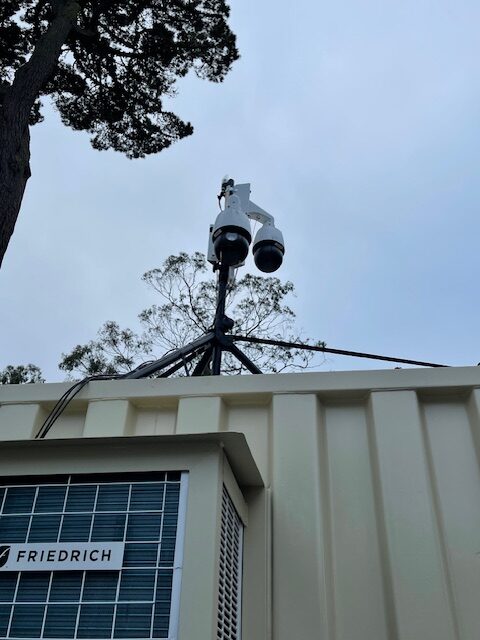
- Cameras detect activity. IP cameras with built-in analytics spot people or vehicles in defined zones, often only during set hours.
- An alert goes out. The system sends a notification with a short video clip or snapshot.
- Someone reviews it. Either you, your manager or a monitoring team checks the live view.
- Action is taken. That might be a voice warning over a speaker, a call to police with a verified description, or dismissing a false alarm.
Self-Monitoring or Professional Monitoring?
| Self-monitoring | Professional monitoring | |
|---|---|---|
| Who watches | You and your staff | A dedicated monitoring team |
| Best for | Small sites, owners who want direct control | After-hours sites, large yards, high-value assets |
| Response at 3 a.m. | Depends on whoever gets the alert | Someone is assigned to respond |
| Ongoing cost | Lower | Monthly monitoring fee |
Many businesses use both: managers keep live access on their phones, and a monitoring service covers nights and weekends.
Why Do Analytics Matter?
Older motion detection triggers on headlights, swaying trees, rain and animals. That floods your phone with false alerts until everyone stops checking. Modern camera analytics recognize people and vehicles specifically, so alerts are worth opening. In the Central Valley, that matters during winter, when rain, wind and tule fog can set off basic motion sensors all night.
Which Businesses Benefit Most?
- Construction sites and equipment yards that sit empty overnight
- Distribution centers and warehouses with large perimeters. See our guide on IP cameras for warehouses.
- Auto dealerships and car lots
- Self-storage facilities and multi-tenant properties
- Retail locations after closing
Can Existing Cameras Be Monitored Remotely?
Sometimes. IP cameras on a modern recorder can usually be connected for remote viewing. Older analog systems may need an upgrade to support analytics and reliable remote access. We assess your current system first and tell you what can stay. Learn more about our video surveillance services and our camera trailers, which include secure 24/7 remote access.
Frequently Asked Questions
Is remote video monitoring the same as an alarm system?
No. An alarm detects a break-in through sensors. Video monitoring lets someone see what's happening. Many businesses combine both. See our guide to business alarm systems.
Do I need fast internet for remote monitoring?
You need a reliable connection with enough upload speed for the cameras being viewed. Sites without wired internet can often use cellular.
Can I talk to someone on my property through the cameras?
Yes, if the system includes speakers. Live voice warnings are one of the most effective ways to stop someone before damage is done.
Which monitoring setup is right for me?
It depends on your site, hours and risk. We'll walk through the options during a free assessment.
Talk to a Security Specialist Today
Golden State Security Integrations is a licensed commercial security integrator serving Lodi, Stockton, Sacramento and the Central Valley, with technicians certified on Avigilon, Lenel, HID, Genetec and Axis systems.
Request a free security assessment or call 209-227-3428 to talk to a security specialist.